
Reclaiming My Narrative
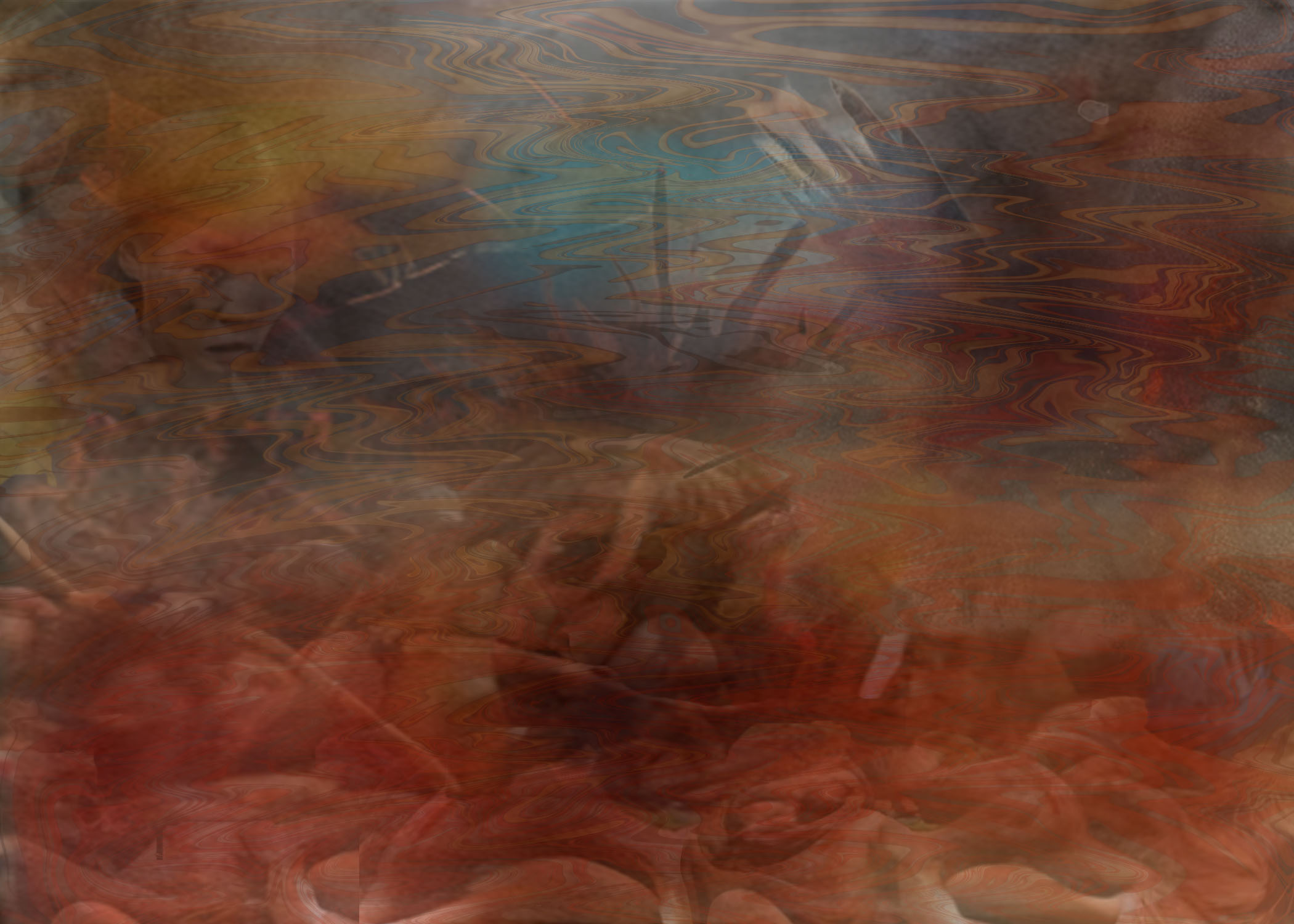
- Name
- Reclaiming My Narrative
- Year
- 2026
- Artist
- Augment Humankind
- Medium
- Digital (CyberRealistic AI model using Adobe Photoshop)
- Dimensions
- 7 x 5 in
This piece is a triptych of digital compositions that I created with the intent of showing hallucinated imagery of the Philippine-American war using source images rendered by the CyberRealistic diffusion AI model. I did not want to integrate the few actual images of my dead ancestors in existence, while most imagery of the Philippine-American war centered around American narratives. My strategic use of generative AI as source material was a decision made about reverence to these lost ancestors and to protect my mental health state. Thus, I decided to merge my interest in resurrecting narratives of the Philippine-American war, a conflict that's often glossed over by mainstream U.S. History courses and narratives, with the onset of AI technologies using an uncensored model that I could host locally on my phone and my computer. This piece was initially inspired by ideas of digital liberation and how technological advances can be used by humans to improve lives and change narratives.
At the same time, media narratives often impose distorted and reductive ideas upon Asian Americans and our histories in the U.S. and in our homelands to promote our experiences as that of a "wedge" group to assign a socially constructed "model minority" narrative. This, in turn, has the intent of erasing our experiences with colonial trauma, including those at the hands of the U.S. ideology of Manifest Destiny. As such, my decision to center this triptych on the Philippine-American war in Batangas province is rooted In my partial ancestry from the region, which was noted as a stronghold of resistance against U.S. imperialism towards the end of the war. I also perceived the need for Americans to understand the degree to which U.S. imperialism has historically (and continues to) negatively impact Filipinos and the unresolved generational trauma that many Filipino Americans experience.
Cameras were in existence by that point, but most were used for narratives of American power, such as to take images of dead Filipino "insurgents" (land defenders) and mundane scenes of American soldiers posing on lands to which they were sent to occupy. Seldom did these images show the devastation and scorched-earth tactics that the U.S. military utilized in the initial years of the U.S. occupation of the Philippines, scenes that would have surely galvanized even the most patriotic of Americans to have protested against the war effort. So, with this triptych, I want to reclaim my narrative and the histories of my ancestors whose stories are often deemed irrelevant in the contexts of modern-day discourse around racial dynamics, white supremacy and American imperial power.
No comments yet. Be the first.